
Lessons from the Trees
How trees can teach us about resilience and growth.

In the early 1990s, a group of scientists set out to build the future—literally. They created Biosphere 2, a massive glass structure in the Arizona desert, designed to replicate Earth’s ecosystems. The goal? To figure out how to sustain life in space. Inside this closed system, they meticulously controlled every variable: temperature, humidity, light, even the mix of gases in the air. It was supposed to be a perfect world. Until it failed spectacularly.
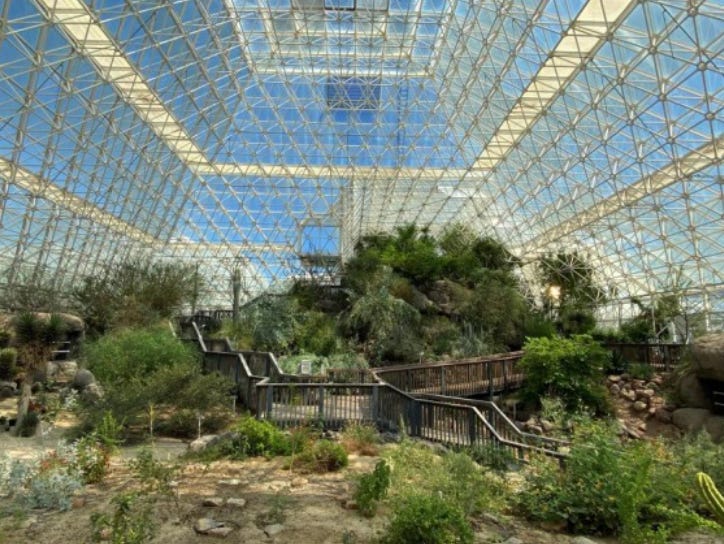
Take the trees inside Biosphere 2 for example. The trees had everything they could ever need—abundant light, water, and nutrients. It seemed like a perfect setup. Yet, over time, something unexpected happened: the trees, initially thriving, began to topple over.
The scientists were puzzled. The trees had all the essentials for growth. So, what was going wrong?
The answer was surprisingly simple yet profound: the trees weren’t exposed to wind.
In the wild, wind is a constant force that makes trees sway. This movement puts stress on the trees, prompting them to grow thicker trunks and develop deeper root systems to anchor themselves. Without wind, the trees in Biosphere 2 grew tall but weak, unable to withstand their own height. They lacked the resilience that comes from being challenged by their environment.
In our pursuit of creating ideal learning environments, we often strive to remove stress and challenges. We design curricula that carefully guide students through every step, we minimize risks, and we go to great lengths to avoid failure. But what if, in doing so, we’re actually depriving our students—and ourselves—of the experiences that build strength and resilience?
Just as trees need wind to grow strong, we need challenges to stimulate our thinking and fuel our growth. Without the “wind” of difficult problems, constructive criticism, and occasional failures, our ideas may seem solid on the surface but might crumble when tested in real-world scenarios.
But the story of Biosphere 2 doesn’t end there. The scientists realized another crucial factor: the trees were growing in isolation. In a natural forest, trees don’t stand alone. Beneath the ground, their roots intertwine, forming a vast, interconnected network. Through this network, trees share resources, communicate, and support each other. When one tree faces stress—be it from wind, drought, or disease—its neighbors can help by providing extra nutrients or water. This underground system allows the trees to grow stronger together, not as competitors, but as collaborators.
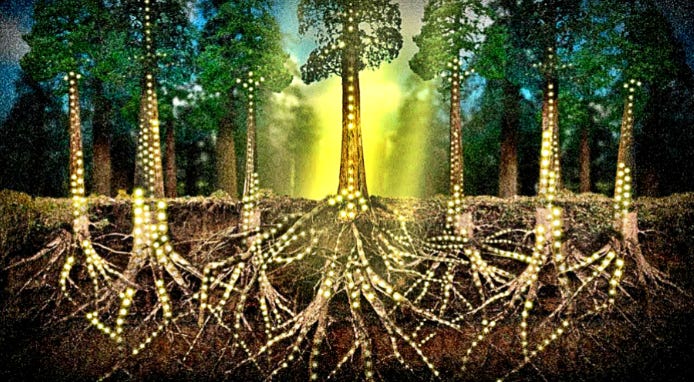
The story of Biosphere 2 offers a powerful lesson: growth isn’t solely about individual resilience; it’s also about the strength that comes from connection. Just as trees in a forest rely on their intertwined roots for support, educators and students need the strength of their community to truly thrive.
As we look ahead to the beginning of a new school year, let’s not only welcome the winds of challenge but also cultivate the roots of collaboration. By fostering environments where innovation is a collective effort, we can build educational systems that are not just resilient but thriving—where ideas, like trees, grow stronger together.
Nice article. I've read a lot about trees helping each other out and that being a metaphor but I'm curious on whether you have real-life examples of this whether you're able to observe resilience in communities grow. Would love your thoughts!
Hi Nate,
Thank you for this post. We'd like to use your graphic in a newsletter. Please email me at admin@soulcultivators.org
Thank you